
Empowering Community Welfare & development Together
OUR PROJECTS


HUMANITARIAN WELFARE
Food Packs
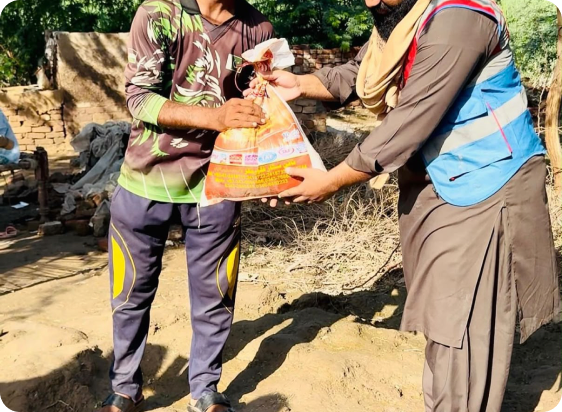
Al Hadi Food Packs provide a comprehensive month-long supply of essential, non-perishable kitchen staples to low-income households, widows, and vulnerable families across Pakistan. Funded directly through Zakat and Sadqah, these packs are distributed door-to-door or via organized local centers to help struggling communities fight severe inflation.
Inside the Food Pack
Each package is carefully designed to feed an average family for 30 days and typically includes:
- Atta (Wheat Flour): A large 10kg or 20kg bag for daily flatbreads (rotis).
- Rice & Lentils: Premium quality basmati rice and assorted daily pulses (daal chana, daal moong).
- Cooking Essentials: High-quality vegetable ghee or cooking oil, sugar, and tea.
- Basic Spices: Essential salt, red chili powder, and turmeric packs.
Focused Distribution Drives
The foundation scales its food pack distribution through three primary operations:
- Weekly Friday Drives: Targeting local daily-wage earners and senior citizens in and around Chenab Nagar (Rabwah).
- Ramadan Ration Campaigns: Massive pre-Ramadan distributions ensuring poor households have Suhur and Iftar food security.
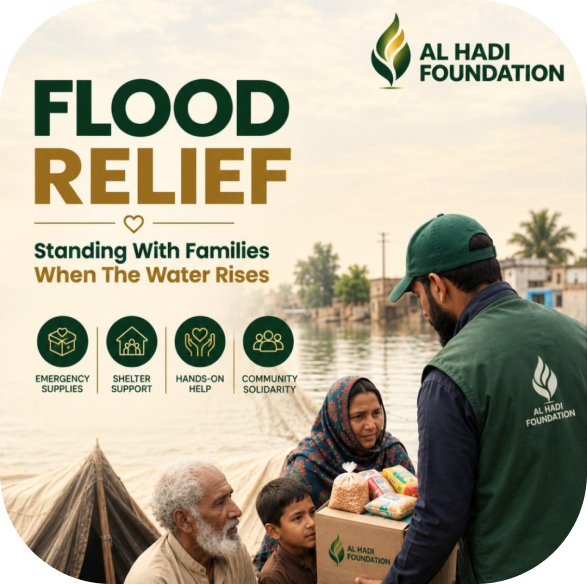
- Winter & Flood Relief Packs: Special seasonal food bundles containing additional high-calorie items delivered directly to disaster-affected zones.
Waqaf Qurbani & Meat pack
The Al Hadi Foundation executes an active, on-ground Waqf Qurbani (Fi Sabilillah) program to deliver fresh meat packs directly to marginalized populations during Eid ul-Adha
Operating out of Chenab Nagar (Rabwah), Punjab, the campaign ensures that 100% of the donated sacrificial shares are processed under strict Islamic rulings and distributed to those who otherwise go meatless throughout the year.
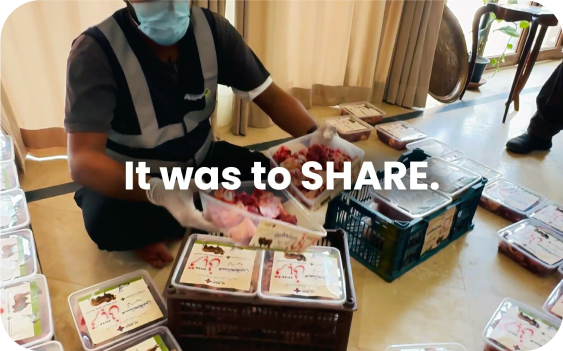
- Hygienic Execution: The on-ground team handles the entire process—from animal oversight to cleaning, sorting, and portioning. The meat is vacuum-sealed or packed into customized, branded boxes to guarantee optimal freshness and hygiene.
- Dignified Hand-to-Hand Delivery: To protect the self-respect of underprivileged beneficiaries, Al Hadi volunteers transport and deliver the meat packs directly door-to-door, rather than holding chaotic open-public distributions.
- 100% Donation Transparency Policy: The foundation accepts both full animals and joint cow shares. Because it is a Waqf (dedicated charitable sacrifice), donors entrust the foundation to handle the slaughter and distribute 100% of the yield to the poor
Community Services & Welfare
The Al Hadi Foundation operates an on-ground disaster management and general community welfare wing to support households during seasonal crises and sudden natural disasters in Pakistan. Fully funded by public Zakat and Sadqah, these community pillars ensure prompt response deployment during national emergencies.
1. Emergency & Flood Relief Operations
When flash floods or heavy monsoon rain crises hit vulnerable regional districts, the foundation mobilizes active ground teams to deliver immediate relief:
- Emergency Supplies: Packing and distributing dry food rations, ready-to-eat meals, and clean mineral water bottles directly to displaced families in high-risk flood zones.
- Shelter Support: Setting up temporary refuge camp infrastructure by distributing emergency family tents, weather-resistant tarpaulins, and clean bedding packages.
- On-Ground Triaging: Coordinating medical teams from Al Hadi Hospital to treat emergency injuries and distribute water-purification pills to block waterborne epidemics.

Water Project
The Al Hadi Foundation Clean Water Initiatives focus on providing sustainable, disease-free drinking water to off-grid rural communities in Pakistan. Driven primarily as a Sadaqah Jariyah (continuous ongoing charity) model, the foundation strategically addresses severe water scarcity in underserved districts.
Core Water Project Models
Rather than relying entirely on a single method, the foundation splits its interventions into distinct project types based on the geographical water table and neighborhood requirements:
- The Water Pipe Project: This unique initiative connects remote, off-grid rural communities directly to mainline sustainable water sources. By laying down physical pipelines, they ensure a direct, consistent water supply right to the doorsteps of highly isolated families.
- Water Filtration Units: Installed at centralized points in communities facing high pollution and industrial runoff risks, ensuring the extraction of 100% safe and contamination-free water to combat waterborne illnesses like cholera and hepatitis
- Community Hand Pumps: Cost-effective manual extraction units installed in dry, lower-income terrains to save women and children from walking miles every day just to fetch essential water

Sports Training Institute
While the Al Hadi Foundation (based in Chenab Nagar) focuses primarily on medical and humanitarian welfare, the name Hadi is tied to a couple of distinct sports setups and training complexes across Pakistan. Depending on what you are looking for, it most likely refers to one of the following:
1. Hadi Indoor Sports Complex
This is a highly popular, commercial indoor facility operating late-night sports setups, widely known for its dynamic turf configurations:
- Facilities: Features premium indoor turf grounds heavily optimized for indoor cricket matches and futsal (indoor football).
- Hours: Tailored for nighttime players, typically remaining open from 12:00 PM until 3:00 AM
- Annual Sports Gala: Headquartered primarily out of Shahdara, Lahore, this network hosts organized Al-Hadi Sports Galas featuring track, field, and team training to foster discipline and motivation among young boys and girls.
- School Grounds: Their separate branches (such as the Cambridge-based Al-Hadi Academy in Karachi) house standalone physical playgrounds and sports grounds dedicated to cricket, basketball, and routine physical education

Women Empowerment
The Al Hadi Foundation empowers women in low-income communities by teaching practical, market-ready skills to help them achieve financial self-reliance. Through dedicated vocational training centers, the foundation provides fully sponsored courses in stitching, tailoring, and garment design. To remove financial barriers, students are provided with necessary learning materials, transport subsidies, and monthly stipends.
Upon successful graduation, the foundation gifts students their own commercial sewing machines or connects them with interest-free microloans to set up micro-enterprises right from their homes. This sustainable approach helps vulnerable women, particularly widows and young daughters, break the cycle of poverty and comfortably support their households with dignity.
- Stitching
- Sewing
- Machinery
- Training
- Tailoring
- Vocational

Rozgaar & Interest Free Loan
The Al Hadi Rozgar scheme provides interest-free microloans (Qard-e-Hasana) to help low-income individuals establish small businesses and achieve long-term financial self-reliance. Managed directly by the Al Hadi Foundation out of Chenab Nagar, Punjab, this program operates on a 100% donation-recovery cycle where returning loan funds are immediately recycled to help new families.
Core Rozgar Loan Models
The foundation structures its interest-free microfinance program into distinct pathways tailored to the applicant's existing skills:
- Micro-Enterprise Setup: Capital loans to open small grocery shops (kiryana stores), mobile repair kiosks, or fruit/vegetable carts.
- Vocational Graduation Grants: Providing commercial sewing machines and initial fabric capital specifically to women graduating from the Al Hadi Vocational Training Center.
- Artisan Equipment Funding: Providing tools and small machinery for skilled laborers, such as electricians, plumbers, and carpenters, to start independent contract work.
- Zero Interest (Riba-Free): The program complies fully with Islamic finance principles. Borrowers repay only the exact principal amount without any hidden fees or markup


